|
|---|


Showing posts with label informative. Show all posts
Showing posts with label informative. Show all posts
Saturday, September 10, 2011
Hungarian made cars, the difficult struggle against political turmoil, lack of manufacturing, and frequent bureaucratic red tape... all they want is to build cars!
0 comments Posted by st at 8:07 AMHungarian car enthusiasts Pal Negyesi and Csaba Hajdu have researched the Hungarian car history thoroughly, and made a 35 page PDF that exemplifies the spirit of perseverance to surmount obstacles in the way of progress.
Their focus is the Hungarian cars made between the years 1945 - 1990, but the inventors, craftsman, and innovators often began before 1945... and so did the national and intenational conflicts and restrictions that created a one of a kind unique situation that resulted in the USSR organization COMECON ruling of 1949 that of all the allied countries, only Hungary would not be allowed to build cars. Busses and trucks, yes... but not cars that the people could use for personal enjoyment, business travel, and product distribution (flowers, parcel delivery, etc etc)
Just as important as the automobile enthusiasts informative look, is the historian enthusiasts understanding of the myriad problems that were brought about by WW2, the USSR governing bureaucracy regulations, lack of car parts manufacturing (no car tire makers for example led to using airplane tail tires), political refusal to allow foreign investors, the revolution of 1956, the oil crisis of 1973, the fall of the USSR in 1990 dissolving all the previous infrastructure that was just beginning to make progress in loosening govt owned company restrictions in involvement in cooperative ventures to produce car and parts... all complicated the Hungarian auto enthusiasts ability to make cars.
But read about the many one off cars that were prototyped, microcars that were made and attempted during this time, the 3 wheelers that were declared "motorbike and sidecar" etc etc in order to bring mobility to the people.
Price is EUR 1 or USD 1.4
There are two ways to pay:
- Either someone sends the amount via PayPal to npaul@hu.inter.net and then I'll send him/her the link
- You can buy an e-book version at Amazon: http://www.amazon.com/dp/B005LOVR02
Their focus is the Hungarian cars made between the years 1945 - 1990, but the inventors, craftsman, and innovators often began before 1945... and so did the national and intenational conflicts and restrictions that created a one of a kind unique situation that resulted in the USSR organization COMECON ruling of 1949 that of all the allied countries, only Hungary would not be allowed to build cars. Busses and trucks, yes... but not cars that the people could use for personal enjoyment, business travel, and product distribution (flowers, parcel delivery, etc etc)
Just as important as the automobile enthusiasts informative look, is the historian enthusiasts understanding of the myriad problems that were brought about by WW2, the USSR governing bureaucracy regulations, lack of car parts manufacturing (no car tire makers for example led to using airplane tail tires), political refusal to allow foreign investors, the revolution of 1956, the oil crisis of 1973, the fall of the USSR in 1990 dissolving all the previous infrastructure that was just beginning to make progress in loosening govt owned company restrictions in involvement in cooperative ventures to produce car and parts... all complicated the Hungarian auto enthusiasts ability to make cars.
But read about the many one off cars that were prototyped, microcars that were made and attempted during this time, the 3 wheelers that were declared "motorbike and sidecar" etc etc in order to bring mobility to the people.
Price is EUR 1 or USD 1.4
There are two ways to pay:
- Either someone sends the amount via PayPal to npaul@hu.inter.net and then I'll send him/her the link
- You can buy an e-book version at Amazon: http://www.amazon.com/dp/B005LOVR02
Friday, September 9, 2011
US government owned car companies (GM for example) used taxpayer dollars to lobby against government regulations for higher fuel economy standards
0 comments Posted by st at 9:05 PMThat has to criminal, and politicians and bureaucrats should be fired. What a waste of money.
The politicians finally had the control of the car company, and didn't force the issue when they had the chance. What a bunch of corruption.
The politicians finally had the control of the car company, and didn't force the issue when they had the chance. What a bunch of corruption.
Wednesday, September 7, 2011
The Chicken War, and the Chicken Tax, and what they have to do with trucks made in Europe and Asia
0 comments Posted by st at 8:26 PMThe Chicken tax was a 25% tax on potato starch, dextrin, brandy, and light trucks imposed in 1963 by the United States under President Lyndon B. Johnson as a response to tariffs placed by France and West Germany on importation of U.S. chicken.
Largely because of post-World War II intensive chicken farming and accompanying price reductions, chicken, once internationally synonymous with luxury, became a staple food in the U.S. Prior to the early 1960s, not only had chicken remained prohibitively expensive in Europe, it had remained a delicacy. With imports of inexpensive chicken from the U.S., chicken prices fell quickly and sharply across Europe, radically affecting European chicken consumption. In 1961, per capita chicken consumption rose 23% in West Germany. U.S. chicken overtook nearly half of the imported European chicken market.
Subsequently, the Dutch accused the U.S. of dumping chickens at prices below cost of production. The French government banned U.S. chicken and raised concerns that hormones could affect male virility. German farmers' associations accused U.S. poultrymen of artificially fattening chicken with arsenic. In fact, U.S. chicken farmers, with Food and Drug Administration approval, had treated chicken feed with antimony, arsenic compounds, or estrogen hormones to stimulate growth.
The period from 1961–1964 of tensions and negotiations surrounding the issue, which took place at the height of Cold War politics, was known as the "Chicken War".
Eventually, the tariffs on potato starch, dextrin, and brandy were lifted, but over the next 48 years the light truck tax ossified, remaining in place to protect U.S. domestic automakers from foreign light truck production (e.g., from Japan and Thailand). Though concern remains about its repeal, a 2003 Cato Institute study called the tariff "a policy in search of a rationale."
As an unintended consequence, several importers of light trucks have circumvented the tariff via loopholes—including Ford (ostensibly a company the tax was designed to protect), which currently imports the Transit Connect light trucks as "passenger vehicles" to the U.S. from Turkey and immediately shreds portions of their interiors in a warehouse outside Baltimore.
http://en.wikipedia.org/wiki/Chicken_tax
Largely because of post-World War II intensive chicken farming and accompanying price reductions, chicken, once internationally synonymous with luxury, became a staple food in the U.S. Prior to the early 1960s, not only had chicken remained prohibitively expensive in Europe, it had remained a delicacy. With imports of inexpensive chicken from the U.S., chicken prices fell quickly and sharply across Europe, radically affecting European chicken consumption. In 1961, per capita chicken consumption rose 23% in West Germany. U.S. chicken overtook nearly half of the imported European chicken market.
Subsequently, the Dutch accused the U.S. of dumping chickens at prices below cost of production. The French government banned U.S. chicken and raised concerns that hormones could affect male virility. German farmers' associations accused U.S. poultrymen of artificially fattening chicken with arsenic. In fact, U.S. chicken farmers, with Food and Drug Administration approval, had treated chicken feed with antimony, arsenic compounds, or estrogen hormones to stimulate growth.
The period from 1961–1964 of tensions and negotiations surrounding the issue, which took place at the height of Cold War politics, was known as the "Chicken War".
Eventually, the tariffs on potato starch, dextrin, and brandy were lifted, but over the next 48 years the light truck tax ossified, remaining in place to protect U.S. domestic automakers from foreign light truck production (e.g., from Japan and Thailand). Though concern remains about its repeal, a 2003 Cato Institute study called the tariff "a policy in search of a rationale."
As an unintended consequence, several importers of light trucks have circumvented the tariff via loopholes—including Ford (ostensibly a company the tax was designed to protect), which currently imports the Transit Connect light trucks as "passenger vehicles" to the U.S. from Turkey and immediately shreds portions of their interiors in a warehouse outside Baltimore.
http://en.wikipedia.org/wiki/Chicken_tax
Iso Rivolta was initially named Isothermos and manufactured refrigeration units before WW2.
After the Second World War, the company reopened its doors, completely changing its activity. In 1948 it began to build motorcycles, scooters and motocarries (three wheeled transport scooters/motorcycles). Among the most famous are the Furetto (1948), 'Isoscooter (1950),' Isocarro (1951), 'Isomoto (1954) and' Isosport (1953). The last Iso motorcycle was presented as the Iso 500 in 1961. Isomotos were known as expensive, but durable and well-built.
In the mid-1950s, he started to develop a miniature car for two persons and front entrance, initially with only three wheels, later, for reasons of stability, with four wheels (the two on the rear very close together): the Isetta Bubble Car. About 20,000 of the bubble cars were built at the Rivolta works near Milan, but this volume was dwarfed by that of the German licensee
Starting in 1954, Isetta was licensed to automobile manufacturers in several countries: France (by VELAM), Spain, Great Britain and Brazil (by Romi). The most successful, however, was the German Isetta built by BMW. The BMW-Isetta fulfilled the dream of mobility in post-war Germany and about 130,000 had been sold by 1962
At the start of 1973 the Rivolta family ceded the business to an Italian American financier named Dr Ivo Pera who promised to bring American management know-how to the firm: the business faded rapidly into obscurity.
Found on http://en.wikipedia.org/wiki/Iso_Rivolta
After the Second World War, the company reopened its doors, completely changing its activity. In 1948 it began to build motorcycles, scooters and motocarries (three wheeled transport scooters/motorcycles). Among the most famous are the Furetto (1948), 'Isoscooter (1950),' Isocarro (1951), 'Isomoto (1954) and' Isosport (1953). The last Iso motorcycle was presented as the Iso 500 in 1961. Isomotos were known as expensive, but durable and well-built.
In the mid-1950s, he started to develop a miniature car for two persons and front entrance, initially with only three wheels, later, for reasons of stability, with four wheels (the two on the rear very close together): the Isetta Bubble Car. About 20,000 of the bubble cars were built at the Rivolta works near Milan, but this volume was dwarfed by that of the German licensee
Starting in 1954, Isetta was licensed to automobile manufacturers in several countries: France (by VELAM), Spain, Great Britain and Brazil (by Romi). The most successful, however, was the German Isetta built by BMW. The BMW-Isetta fulfilled the dream of mobility in post-war Germany and about 130,000 had been sold by 1962
At the start of 1973 the Rivolta family ceded the business to an Italian American financier named Dr Ivo Pera who promised to bring American management know-how to the firm: the business faded rapidly into obscurity.
Found on http://en.wikipedia.org/wiki/Iso_Rivolta
Monday, September 5, 2011
Charlie would like to know more about this Morris J he bought in Victoria BC, email him if you recognize it please
0 comments Posted by st at 12:35 PM

This had me wondering if a Morris J is part of the MG company,... MG is pretty well known for the great little sports cars. The letters MG are representative of Morris Garages, and I looked them up to see about the Morris J.
The Morris J was launched by the Morris Commercial subsidiary of Morris Motors in 1949 and produced until 1961. In 1952 the Commercial name was dropped and the van was marketed as the Morris J-type. As well as complete vehicles, the J-type was also supplied in chassis form to external body makers and it appeared, amongst other uses, as a pick-up, tipper truck, ice cream van and milk float. Many were bought by the British Post Office and these differed from standard in having rubber front and rear wings.
http://en.wikipedia.org/wiki/Morris_Commercial_J-type and there is even a Morris J registry and info source http://www.jtypevan.com/ which has links to Morris J van owners websites.. (really cool ones too)
Here's what Wikipedia has about Morris Garages:
The MG Car Company got its name from Morris Garages, a dealer of Morris cars in Oxford which began producing its own customised versions to the designs of Cecil Kimber, who had joined the company as its sales manager in 1921. He was promoted to general manager in 1922, a position he held until 1941 when he fell out with Lord Nuffield over procuring wartime work. Kimber died in 1945 in a freak railway accident.
The first cars which were rebodied Morris models used coachwork from Carbodies of Coventry and were built in premises in Alfred Lane, Oxford. Demand soon caused a move to larger premises in Bainton Road in September 1925, sharing space with the Morris radiator works. Continuing expansion meant another move in 1927 to a separate factory in Edmund Road, Cowley, Oxford, near the main Morris factory and for the first time it was possible to include a production line. In 1928 the company had become large enough to warrant an identity separate from the original Morris Garages and the M.G. Car Company Limited was established in March of that year and in October for the first time a stand was taken at the London Motor Show. Space again soon ran out and a search for a permanent home led to the lease of part an old leather factory in Abingdon, Oxfordshire in 1929, gradually taking over more space until production ended there in 1980. The MG Car Club was founded in 1930 for owners and enthusiasts of MG cars.
Originally owned personally by William Morris, the company was sold to Morris Motors (itself part of the Nuffield Organisation) in 1935, MG was absorbed into the British Motor Company, created in 1952 as a merger of the Nuffield Organisation and the Austin Motor Company. BMC merged with Jag in '66 to become renamed as British Motor Holdings, which didn't last 2 years before mreging with Leyland to form British Leyland, which couldn't make it and in 75 was renamed British Leyland, but in 1980 was killed off due to politics.
After BL became the Rover Group in 1986, ownership of the MG marque passed to British Aerospace in 1988 and then in 1994 to BMW.
BMW sold the business in 2000 and the MG marque passed to the MG Rover Group, the Group went into receivership in April 2005, in July the Nanjing Automobile Group purchased the rights to the MG brand and the assets of the MG Rover Group http://en.wikipedia.org/wiki/MG_(car)
Thursday, September 1, 2011
What did Joe Namath do with the Charger R/T he was given as MVP for winning the Super Bowl?
0 comments Posted by st at 9:31 PMAccording to some, it was a bronze with black stripe, according to another the centerfold of the "Post" had the photo of Joe recieving a B5 blue with white vinyl top.
If GM weren't such run by inept idiots, Chrysler would no longer exist.
GM could have bought Fiat a couple years ago, but changed their mind, and had to pay 2 billion for some reason because they backed out in 2005.
That gave Fiat the cache it needed to buy Chrysler and keep it afloat.
GM could have bought Fiat a couple years ago, but changed their mind, and had to pay 2 billion for some reason because they backed out in 2005.
That gave Fiat the cache it needed to buy Chrysler and keep it afloat.

Tuesday, August 30, 2011
Starting July 1st, solo drivers of hybrid cars in California will see their special pass to the car pool lane disappear.
0 comments Posted by st at 9:05 PM85,000 were issued to hybrids. Prius and Honda Civic and others.

Since 2004, hybrid owners with a special permit were allowed entry into California’s High-Occupancy-Vehicle (HOV) lanes even when driving alone.
The special yellow key-shaped decals that denoted access quickly became a must-have for traffic-weary hybrid owners, and added up to $1,500 to the resale value of the hybrid that sported one against its more mundane siblings.
read the whole story at
What we know as dashboards, not the one on your computer, in cars- are evolved from the early dashes in horse carriages and buggys. The dash board was the boards or material dropcloth that kept the horses back feet from splashing mud and muck onto the driver and carriage... the carriages became motorized and the dashboards were the best place for the first gauges, so the dashboards became the instrument panels


from the above splash guard behind the horse, to

Sparked by an article http://tywkiwdbi.blogspot.com/2011/02/why-is-it-called-dashboard.html
Friday, August 26, 2011


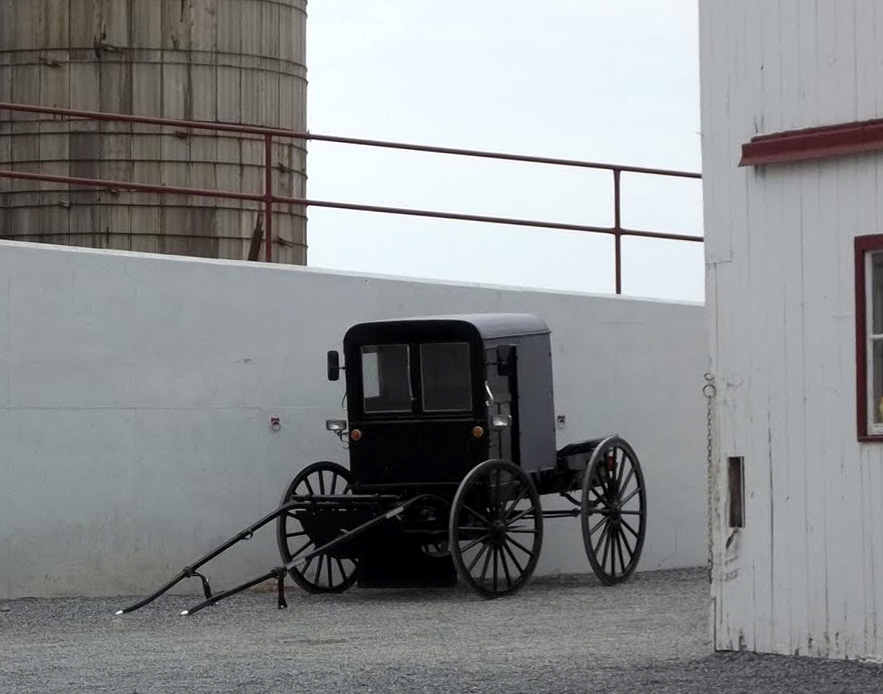
Amish Stories blogspot has recipes, food stands, handcrafted art like painted horseshoes, and other Amish cultural stuff. It's posted by a non Amish guy (if you've no idea what Amish are, they are anti technology descedants of the Swiss and German immigrants of the 1690's to the Pennsylvania and Ohio area, they have a German accent, build everything by hand using no electrical tools, and they also won't join the military)
But the horse carriages and buggies are unique in America for all I know, as the Amish won't own, drive, or ride in cars. Maybe they have a historic date that they aren't allowed to pass in material technology, because they are very aware of the rest of the worlds technology, but they religiously adhere to the farming culture of their ancestors. Their carpentry is said to be superb.
Thursday, August 25, 2011
Great look inside the Harley Davidson museum with photos, captions and information at galenfrysinger.com
0 comments Posted by st at 6:10 PM


the oil was in glass bottles during the war due to metal shortages.
all these are just a brief glimpse of the gallery that is a through look at the museum, the full webpage is at http://www.galenfrysinger.com/milwaukee_harleydavidson_museum.htm
Monday, August 22, 2011
Quaker State wants to pay you to use their oil for 300,000 miles, but good luck with trying to keep a car that long
0 comments Posted by st at 6:56 PM
Use Quaker State® high mileage, synthetic blend, or full synthetic motor oil (“specialty motor oil”) starting no later than when your vehicle reaches 100,000 miles and you may qualify to receive up to $3,000 US. Certain restrictions apply. See terms and conditions for details.
(in a nutshell, you'll get a cash payment equal to the Kelley Blue Book trade-in value of your vehicle, up to $3,000. The oil company will give you the money without taking the car)
•Register before your engine has 75,000 miles or less when you first used Quaker State® motor oil, and has been manufactured within the last 72 months of your first use of Quaker State® motor oil (“Eligible Vehicle”).
•The Quaker State Lubrication Limited Warranty takes effect 6 months after your first eligible purchase of Quaker State® motor oil. You are eligible to make a claim for a Cash Back Bonus when your eligible vehicle has reached 300,000 miles AND it is no older than 20 years.
•GRANDFATHER CLAUSE. If you are an existing Quaker State® motor oil customer registered for the Quaker State Lubrication Limited Warranty program before June 1, 2011, you have the opportunity to be eligible for the Cash Back Bonus Program disregarding of which type of Quaker State® motor oil you use.
http://www.quakerstatewarranty.com/our_warranty/
(I have the feeling this doesn't apply to many people, and they aren't going to pay out very often... just how few people ever keep a car that long? Really few. How many cars car survive for 300000 miles? Very few. Now of those very very few cars that stay with one owner, and aren't damaged in other ways, how many owners are going to hear about this offer in time to sign up, and then never use any other oil? Yeah, almost none.)
Saturday, August 13, 2011

Belgium set out on the adventerous path of automobile production at a very early stage. In 1894, Vincke, the first car to be sold in Belgium was designed in a workshop in Malines, where railway carriages were upholstered.
Several companies brought out cars and motorcycles of excellent quality at competitive prices. These cars made a hit abroad and three-fourths of the cars designed and manufactured in Belgium therefore were channelised towards export.
The major makes, of which models can be admired in the museum are Minerva, the most well-known Belgian make founded by Sylvain de Jong, F.N., which also specialised in motorcycles, Imperia and Miesse.
The HEMI name comes from the dome-shaped ceiling atop each cylinder inside some engines, since it was introduced by obscure Belgian car maker Pipe in 1905.
In 1914, Belgium ranked first on the international automobile construction scene. But the War gets the better of this rapid development. Curiously, the determining factor was not the looting of factories but the end of "free trade" and the emergence of protectionist tendencies adopted by various countries after the War.
Minerva remained a major make. http://justacarguy.blogspot.com/search/label/Minerva for a couple of different model year examples of Minervas
F.N., Excelsior and Imperia started making more elaborate cars which met with success on the market. Pipe decided to specialise exclusively in lorries.
In most countries, the beginning of the thirties was marked by significant technological advancements. Free wheels, front-wheel drives and steel bodies appeared. But the Belgian industry, hard hit by the economic crisis, found itself short of resources needed to compete with these advancements.
The period from 1930 to 1940 witnessed a gradual transition of an entirely domestic industry into an assembly sector where foreign cars were built. Efforts on the research and development side were absent and production activity alone remained.
Not being able to renew its models, Imperia acquired a licence for an excellent ultra-modern German car with front-wheel drive, the Adler. Its name could therefore figure on beautiful cars until 1940.
After World War II, the few remaining Belgian car makers could not face the competition from abroad. The Belgian automobile construction left behind but memories of its glorious days.
above info from http://www.autoworld.be/en/5.asp
ADK (automobile)
AlatacALP (automobile)
Antoine (automobile)
Astra (1930 automobile)
Auto-Mixte
Compagnie Nationale Excelsior
De Wandre
DelecroixImperia (car)
Jeecy-Vea
Juwel
Meeussen
MétallurgiqueMinerva (automobile)
Nagant
Pieper
Pipe (car)
Springuel
Vivinus
Monday, August 8, 2011

Buffalo Bill, (1846-1917) one of the few legends of the wild west to have a lot of photos taken of him.
Among other incredible life achievements, he was a Pony Express rider, recieved the Congreessional Medal Of Honor while in the Army as a scout, and got the nickname Buffalo for killing more than his competition when the govt wanted buffalo meet to feed the Army and the Kansas Pacific Railroad
Read more about him at http://en.wikipedia.org/wiki/Buffalo_Bill
Tuesday, August 2, 2011
Maserati went bankrupt in 1975, since then, here is the list of who has owned it
0 comments Posted by st at 6:12 PMAlfa Romeo, Chrysler, Citreon, Ferrari, Fiat, the Italian Govt., and DeTomoso
Sunday, July 31, 2011
1919 Harley Davidson registration and cautionary page about stolen Harleys
0 comments Posted by st at 10:06 PM


the above has some offensive, bizarre, and obsolete info to offer as advice. Put on bumpers? Leave the lights on when parked at night?


Amazing life story, Robert Fulton Jr (from Steampunkvehicles.tumblr, source of lots of incredible good stuff)
0 comments Posted by st at 2:33 PM
Born in Manhattan, New York on April 15, 1909 and named for Thomas Edison, who was a friend of his father, Robert Fulton, Sr.
His father was also a president of Mack Trucks. His maternal grandfather, Ezra Johnson Travis, ran stagecoach lines across the old west after the Civil War and his uncle, Elgin Travis, who took them over from his father, eventually converted the stagecoach routes into bus lines, which became Greyhound Bus Line.
As a teenager he was in the elite when he traveled by commercial aircraft from Miami, Florida, to Havana, Cuba, in 1921. And then to Egypt when Tutankhamun’s tomb was opened in 1923.
Then, at age 23, he traveled 25,000 miles (from London to Tokyo through 32 countries in 18 months) on a twin-cylinder Douglas motorcycle, to study architecture around the world. His customized bike contained an extra large fuel tank, a secret hiding place for his .32-caliber Smith & Wesson revolver and enough room to carry his motion picture camera and 40,000 feet of film.
Upon his return he detailed his adventures in a book, One Man Caravan, In 1983 he produced, edited, and released, with his filmmaking sons, a 90 minute film compiled from his home movies, The One Man Caravan of Robert E. Fulton, Jr. An Autofilmography
Following the outbreak of World War II, Fulton taught himself to fly then designed the Gunairstructor, a aerial combat gunnery training simulator that was used to train Navy pilots which increased the kill ratio for ww2 US pilots by a huge factor
In 1946, he invented the flying car. Known as the Airphibian, the vehicle flew over 100,000 miles and received an endorsement from Charles Lindbergh
Fulton then developed the Fulton surface-to-air recovery system, also called the Skyhook for the Central Intelligence Agency (CIA), the United States Navy, and the United States Air Force. It was a system that was used to pick up people from the ground with an aircraft
Her also owned and flew a P51d Mustang that the govt had sold as surplus for $755, he would fly his P51 from one Air Force base to another as he had clearance resulting from his top secret invention work
In the mid 1970's he was a film teacher at the Chicago Art Institute
http://steampunkvehicles.tumblr.com/post/7896756928/this-is-robert-edison-fulton-jr-from-the-wiki started me looking into this and a lot more info was pulled from the comments at http://www.blogofdeath.com/archives/000970.html and looking for the movie I found http://manions.blogspot.com/2009/01/dvd-review-robert-fulton-one-man.html
http://www.searchlightfilms.com/projects/ lists these films
ONE MAN CARAVAN, 3 part series, 30 minutes each. The life, travels and inventions of my father, Robert E. Fulton, Jr., who in 1932 rode a Douglas motorcycle around the world, then invented the Gunairstructor (the first-ever fighter pilot fixed aerial gunnery trainer), the Airphibian (the first flying car ever approved as airworthy by the FAA, now in the Smithsonian National Air and Space Museum) and Skyhook (an air-rescue system to pick up a man with an airplane in flight). Independently produced with Antenne 2, France. Broadcast in France and French territories worldwide. Also available in english. Director, Cinematographer, Editor.
TWICE UPON A CARAVAN, 53 minutes. 1932-33 solo around-the-world motorcycle trip filmed by my father, Robert E. Fulton, Jr. Original 35mm footage taken by him at age 23 has been edited with his reflections about the trip from his perspective as an older man. A rare look at countries, landscapes, monuments and civilizations that no longer exist. It is primary source material for anthropological, cultural and history studies. Music by Steven Schoenberg. Distributed by Whitehorse Press. Winner: Telluride Indie Festival. Producer, Editor.
There is nothing in Netflix. The book is available on Amazon http://www.amazon.com/One-Caravan-Incredible-Journeys-Books/dp/1884313051 or http://www.whitehorsegear.com/one-man-caravan
But the only way I can find the DVD of Twice Upon A Caravan is http://www.whitehorsegear.com/twice-upon-a-caravan-dvd and for the one hour movie, they want 30 dollars. Anyone want to resell their copy at a "Used" price? I don't want to see a one hour movie at 3 hours income price.
Saturday, July 30, 2011
Taximeter and taxameter... words no longer in use, just 100 years later
0 comments Posted by st at 6:38 PM
notice the above taxi had a meter on the far side of the vehicle, and the below has one on the near side
 A taximeter is a mechanical or electronic device installed in taxicabs and auto rickshaws that calculates passenger fares based on a combination of distance travelled and waiting time. It is the shortened form of this word that gives the "taxi" its name.
The modern taximeter was invented by German Wilhelm Bruhn in 1891, and the Daimler Victoria—the world's first meter-equipped (and gasoline-powered) taxicab—was built by Gottlieb Daimler in 1897.
found among hundreds of great old car catalogs at http://digitalgallery.nypl.org/nypldigital/dgkeysearchresult.cfm?word=title_id_list:454055&slabel=Automobiles%253A%2520Manufacturers%2520catalogues%252E&sScope=images&sLevel=1
Subscribe to:
Posts (Atom)