Showing posts with label Ford. Show all posts

Thursday, August 4, 2011


King George V and Queen Mary visit the Ford stand at the Empire Exhibition. Wembley; London. 1925

Thursday, July 28, 2011


C. L. 1895 Simmonds' Steam Carriage
 The steering handle looks like a kids wagon handle.  1895 Electrobat Runabout
\1895 Joseph Shaver's Steam Buggy, Milwaukee, WI

 1895 Roger Petroleum Wagon
 1895 Victoria Motorette racine Motor vehcile co
 1895 Woods Electric Landau
 1896 Dey-Griswold Electric Phaeton
 1896 Enig Steamer, Jacksonville, FL
 1896 Hiram Percy Three Wheeler
 1897 Charles Burrows... wonder how long it took hime to learn that a narrow front end isn't good in corners
1897 Reeves Motor Wagon
 1898 Altham Deliver Van
 1898 Eastman Electro-Vehicle
 1898 Piper and Tinker Steam Buggy
 1898 Winton Delivery Wagon
 1899 General Electric Brougham
 1899 International Motor Wheel Delivery Van
 1899 International Motor Wheel Delivery Van
 1900 Coca Cola Wagon
 1900 Orient Autogo
1901 Century Tourist  Steamer

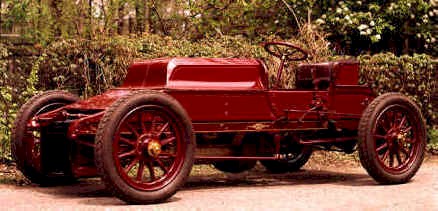
 1901 Ford Race Car
 1901 Ford Runabout
1901 Franklin
 1901 Trimotor Crescent
 1902 Automotor with a rumble seat... really is the progenitor of the rumble seat
 1902 Stearns Steam Surrey

 1902 Thomas Touring
 1902 Toledo
 1902 W.S. Rogers Transit Steam Wagon
 1902 Winton Bullet Race Car.
 1903  Oldsmobile Pirate Race Car
 1903 Duryea Three Wheeler
 1903 Mitchell
 1903 Oldsmobile enclosed body... wow, what a funky design
 1903 Pullman Six Wheel Touring
 1904 Oldsmobile Pie Wagon
 1904 Peerless Barney Oldfields' Racer,   this is the Green Dragon
 1905 Scharbach  (Hill Climber) Roadster
 1906 Shawmut The winner of the 1909 Pan Pacific Race from New York City to Seattle
 1907 Bugmobile
1907 Duer High Wheeler 

1907 Lansden Electrette

all of these and many more can be found at http://www.earlyamericanautomobiles.com/1890a.htm

Sunday, July 24, 2011

Sunday, July 17, 2011

The large-scale, production-line manufacturing of affordable automobiles was debuted by Ransom Olds at his Oldsmobile factory in 1902. The assembly line style of mass production and interchangeable parts had been pioneered in the U.S. by Thomas Blanchard in 1821, at the Springfield Armory in Springfield, Massachusetts. This concept was greatly expanded by Henry Ford, beginning in 1914.

As a result, Ford's cars came off the line in fifteen minute intervals, much faster than previous methods, increasing productivity eightfold (requiring 12.5 man-hours before, 1 hour 33 minutes after), while using less manpower. It was so successful, paint became a bottleneck. Only Japan black would dry fast enough, forcing the company to drop the variety of colors available before 1914, until fast-drying Duco lacquer was developed in 1926. This is the source of Ford's apocryphal remark, "any color as long as it's black". In 1914, an assembly line worker could buy a Model T with four months' pay.

Ford's complex safety procedures—especially assigning each worker to a specific location instead of allowing them to roam about—dramatically reduced the rate of injury. The combination of high wages and high efficiency is called "Fordism," and was copied by most major industries. The efficiency gains from the assembly line also coincided with the economic rise of the United States. The assembly line forced workers to work at a certain pace with very repetitive motions which led to more output per worker while other countries were using "less productive methods". (higher quality work from master mechanics, master carpenters, master craftsmen were forced out of auto manufacturing, replaced by unskilled labor at drastically less per hour) http://justacarguy.blogspot.com/2007/07/changing-times-in-auto-industry.html

In the automotive industry, its success was dominating, and quickly spread worldwide seeing the founding of Ford France and Ford Britain in 1911, Ford Denmark 1923, Ford Germany 1925; in 1921, Citroen was the first native European manufacturer to adopt the production method. Soon, companies had to have assembly lines, or risk going broke; by 1930, 250 companies which did not, had disappeared.
http://en.wikipedia.org/wiki/Automobile

Wednesday, July 6, 2011


FREE HOT BODYPAINTING | HOT GIRL GALERRY